

CNC Router
The CNC Router manufacture!
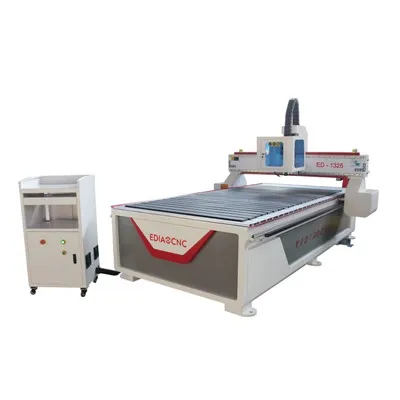
Jinan Yidiao CNC Equipment Co., LTD it is a professional China CNC machine manufacturer with core technology and independent intellectual property rights.




Why choose us
Sales market
Yidiao products in over 180 countries from Asia, Europe, Africa, North America, South America, and Oceania, which drive us to be a global CNC machine brand.
Our Certificate
Jinan Yidiao company has independent import and export rights and has passed CE, SGS, and FDA certifications.
Our Service
Our sales will recommend suitable machines based on your application, we will ask you about the processing material, material thickness, processing format, etc.
|
1 |
Model |
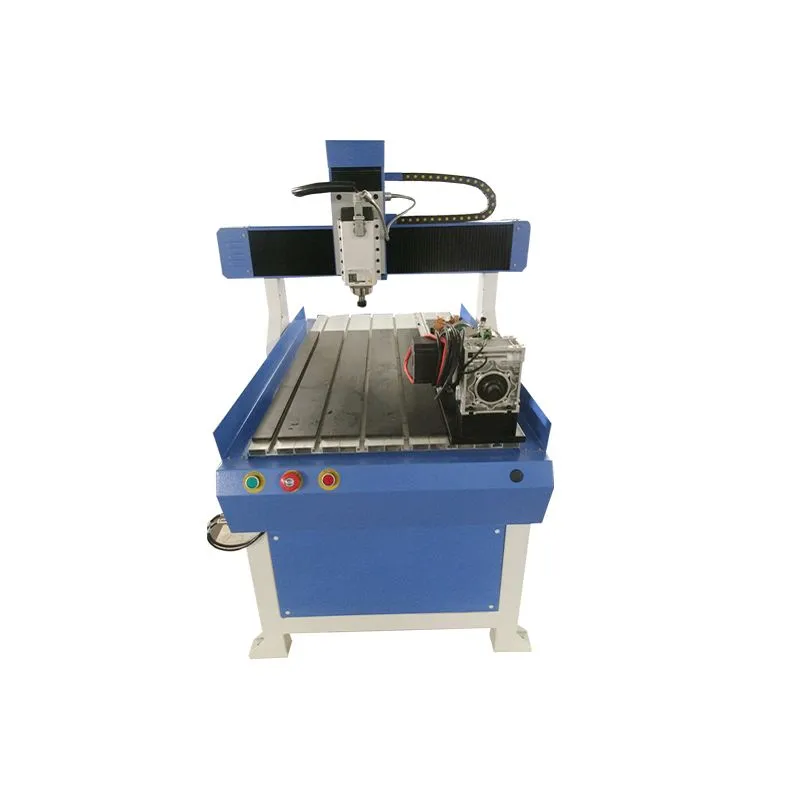
EK-4040 |
|
2 |
Machine structure |
Cast steel structure, table move on Y axis |
|
3 |
Working area |
400x400mm |
|
4 |
Feeding height |
150mm |
|
5 |
Spindle |
2.2kW water cooling spindle |
|
6 |
Range of Spindle Speed(r.p.m) |
1 - 24000 rpm |
|
7 |
Control system |
MDR / DSP / NCSTUDIO |
|
8 |
Drive motor |
Stepper motor (servo optional) |
|
9 |
X Y Z axis transmission |
Ball screw |
|
10 |
Working precision |
0.05mm |
|
11 |
Repeatability precision |
0.02mm |
|
12 |
Command code |
HPGL, G code |
|
13 |
Compatible software |
Type3/Artcam/UG/Pro-E/Mastercam/Ucancam etc |
|
14 |
Working voltage |
AC220V±10% / 50~60Hz |
|
15 |
Power |
3KW |
|
16 |
Weight (KG) |
250 |
|
17 |
Dimension(L*W*H) |
0.71*0.82*1.42m |
|
18 |
Warranty times |
18 months |
Benefits of CNC Router
Improve efficiency
Time is money for all businesses, but this is especially true for small businesses where profit margins are usually much smaller. In a given week, the number of projects completed in a month or a quarter can have a significant impact on your overall profitability at the end of the year.
Cost-effectiveness
Small business owners are usually intimidated by the perceived cost of CNC machines because they are not sure if it is really worth the investment. The fact is that the combination of efficiency, functionality, precision, and ease of use of CNC technology makes it one of the most cost-effective purchases you have ever made for your business.

Improve accuracy and quality
In the production and manufacturing process, the quality of the product must be guaranteed, because if your results are inconsistent and unreliable, no one is willing to cooperate with you. The advanced computerized function of CNC technology means that cutting can be performed and can be repeated to one-thousandth of an inch. This work is not only incredibly accurate but also maintains this state from the first cut to one-thousandth.
Automation
When we say that a CNC machine tool is essentially an excellent employee, we are mainly talking about its ability to automate processes. In the manual process that requires manual operation at any time, CNC work can be set and then completed, while other tasks are taken care of by the workshop. This level of automation is a key factor in the efficiency and cost-effectiveness of adding CNC technology to your small business.
Types of CNC Routers
Hobby CNC Routers
Designed for DIY enthusiasts and small projects, hobby CNC routers are compact, affordable, and easy to use. They are perfect for home use and small-scale production. Hobby CNC routers are often available in kit form for self-assembly, which can be a great way to get into CNC routers and understand their core workings.
Mid-Level CNC Routers
These routers offer a balance between affordability and functionality. They are suitable for small to medium-sized businesses and educational establishments and can handle a wider range of materials and more complex projects.
Industrial CNC Routers
Industrial-grade CNC routers are built for high-volume production, working single, double, or triple shifts and can handle large, heavy materials. They are often more customised to suit specific customer requirements, focusing on process speed.
Common Applications of CNC Router
Woodworking:
Crafting furniture, cabinetry, and detailed wood carvings.
Prototyping:
Developing prototypes using materials such as plastics, foam, and soft metals.

Sign Making:
Creating signs from materials like wood, plastic, and metal.
Automotive and Aerospace:
Manufacturing precise components and parts.

We have a highly standardized production workshop to ensure that every link is precisely controlled, to achieve efficient and high-quality output. Our workshop is organized into clearly defined zones, each dedicated to specific stages of production, from raw material handling to final product assembly. By maintaining a standardized production process, we can deliver reliable, high-quality products to our customers consistently and efficiently.
Certification

FAQ
We're well-known as one of the leading CNC router manufacturers and suppliers in China. Please feel free to buy high quality CNC router for sale here from our factory. For price consultation, contact us.
