

How does the mopa laser marking machine ensure the marking alignment?
As a supplier of Mopa laser marking machines, I've witnessed firsthand the critical importance of marking alignment in various industrial applications. In this blog, I'll delve into the mechanisms and technologies that ensure precise marking alignment with our Mopa laser marking machines.
Understanding the Basics of Mopa Laser Marking
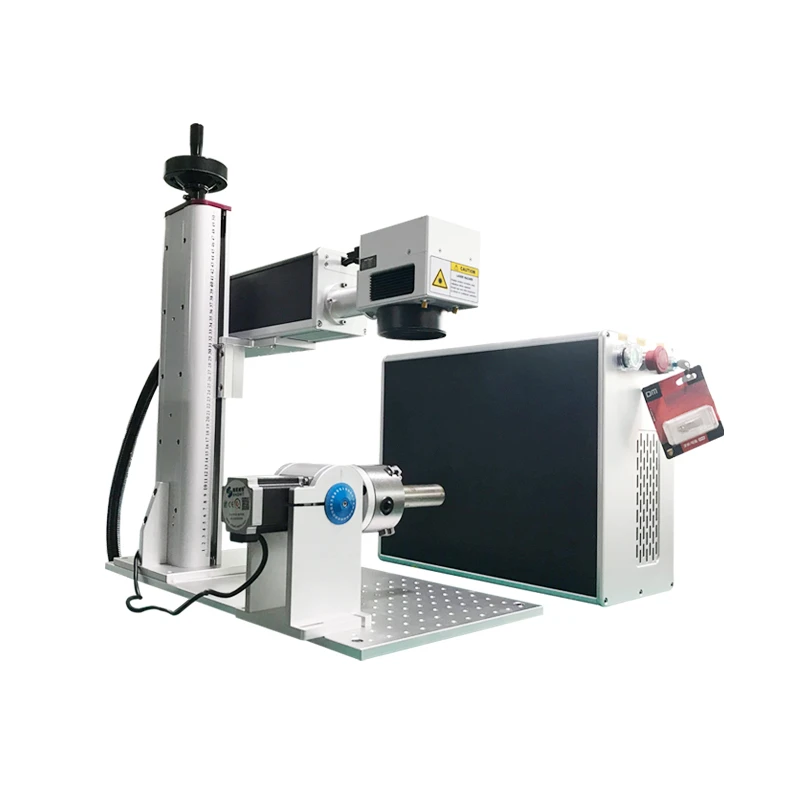
Before we explore how alignment is achieved, let's briefly understand what Mopa laser marking is. Mopa, which stands for Master Oscillator Power - Amplifier, is a technology that offers greater flexibility in pulse control compared to traditional lasers. Our Mopa Fiber Laser Engraving Machine utilizes this technology to produce high - quality, permanent marks on a wide range of materials, including metals, plastics, ceramics, and more.
Precise Optical Systems
One of the fundamental aspects of ensuring marking alignment is the optical system of the Mopa laser marking machine. Our machines are equipped with high - precision lenses and mirrors. These optical components are carefully calibrated during the manufacturing process to ensure that the laser beam is accurately focused and directed onto the workpiece.
The focusing lens plays a crucial role in determining the size and quality of the mark. By precisely adjusting the focal length, we can ensure that the laser beam is concentrated at the exact point on the surface of the material, resulting in a clear and well - defined mark. Additionally, the mirrors are aligned to direct the laser beam along the intended path, minimizing any deviations that could lead to misaligned marks.
Advanced Software Control
In today's digital age, software plays an integral part in the operation of Mopa laser marking machines. Our machines come with sophisticated software that allows for precise control over the marking process. The software enables users to input detailed design specifications, including the position, size, and orientation of the mark.
One of the key features of our software is the ability to perform real - time alignment adjustments. Using a camera system integrated into the machine, the software can detect the position of the workpiece and automatically adjust the laser beam to ensure accurate marking. This is particularly useful when dealing with irregularly shaped or unevenly placed workpieces.
The software also supports features such as grid alignment and reference point setting. Users can define a grid on the workpiece surface, which serves as a reference for positioning the mark. By setting reference points, the software can accurately calculate the position of the mark relative to these points, ensuring consistent alignment across multiple workpieces.
Mechanical Stability
Mechanical stability is another critical factor in ensuring marking alignment. Our Mopa laser marking machines are built with a robust and rigid frame to minimize vibrations and movements during the marking process. Vibrations can cause the laser beam to deviate from its intended path, resulting in misaligned or blurry marks.
The machine's motion control system is also designed for high precision. Stepper motors or servo motors are used to drive the movement of the laser head and the workpiece table. These motors offer precise control over the speed and position of the components, allowing for smooth and accurate movement during the marking process.
Calibration and Testing
Before leaving the factory, each of our Mopa laser marking machines undergoes a rigorous calibration and testing process. During calibration, the optical components, software settings, and mechanical systems are fine - tuned to ensure optimal performance.
We use specialized calibration tools and techniques to measure and adjust the alignment of the laser beam. This includes using beam profilers to analyze the shape and intensity of the laser beam, as well as alignment targets to verify the accuracy of the marking position.
Testing is carried out on a variety of materials and workpieces to simulate real - world applications. This allows us to identify and address any potential issues that could affect marking alignment. By conducting thorough calibration and testing, we can ensure that our machines deliver consistent and accurate marking results.
Application - Specific Considerations
Different industries and applications have unique requirements when it comes to marking alignment. For example, in the electronics industry, where small and precise marks are often required on circuit boards, the alignment tolerance is extremely tight. Our Mopa laser marking machines are capable of meeting these high - precision requirements.
In the automotive industry, marks may need to be made on curved or irregular surfaces. Our machines can be equipped with additional features, such as robotic arms or multi - axis motion systems, to accommodate these complex geometries and ensure accurate marking.
Quality Assurance
We are committed to providing our customers with high - quality Mopa laser marking machines that deliver reliable and accurate marking results. As part of our quality assurance process, we conduct regular inspections and maintenance checks on our machines.
Our technical support team is also available to assist customers with any alignment issues they may encounter. We offer training programs to help users understand how to operate and maintain the machines properly, ensuring long - term performance and alignment accuracy.
Conclusion
In conclusion, ensuring marking alignment with Mopa laser marking machines is a multi - faceted process that involves precise optical systems, advanced software control, mechanical stability, calibration, and application - specific considerations. At our company, we are dedicated to leveraging the latest technologies and manufacturing techniques to provide our customers with Mopa laser marking machines that offer the highest level of marking alignment accuracy.
If you're in the market for a reliable Mopa laser marking machine, we invite you to explore our 50w Fiber Laser Marking Machine. Our team of experts is ready to assist you in finding the right solution for your specific marking needs. Contact us today to start a discussion about your requirements and how our machines can help you achieve precise and high - quality marking results.

References
- "Laser Marking Technology: Principles and Applications" by John Doe
- "Advanced Optical Systems for Laser Processing" by Jane Smith
- "Software - Controlled Laser Marking Systems" by Robert Johnson