

How does the pulse frequency of a UV laser marking machine affect the marking?
Hey there! As a supplier of UV laser marking machines, I've had my fair share of experiences and insights into how different factors can impact the marking process. One of the most crucial factors is the pulse frequency of a UV laser marking machine. In this blog, I'll be diving deep into how the pulse frequency affects the marking and why it matters in various applications.
First off, let's understand what pulse frequency is. Pulse frequency refers to the number of laser pulses emitted per second. It's measured in Hertz (Hz). For example, if a UV laser marking machine has a pulse frequency of 20 kHz, it means it emits 20,000 laser pulses every second. This frequency can have a significant impact on the quality, speed, and overall effectiveness of the marking.
Impact on Marking Quality
One of the most noticeable effects of pulse frequency on marking quality is the depth and clarity of the mark. At lower pulse frequencies, each laser pulse has more energy because the energy is concentrated in fewer pulses. This can result in deeper marks on the material surface. For instance, when marking on metals like stainless steel or aluminum, a lower pulse frequency might be used to create a more pronounced and durable mark. However, if the frequency is too low, it can also cause the material to overheat, leading to discoloration or even damage to the surface.
On the other hand, higher pulse frequencies distribute the energy more evenly over a shorter period. This can be beneficial for creating fine and detailed marks, especially on delicate materials such as plastics or glass. The rapid succession of pulses allows for precise control over the marking process, reducing the risk of material damage. For example, when marking barcodes or serial numbers on plastic products, a higher pulse frequency can ensure clear and accurate markings without causing any warping or melting of the plastic.
Another aspect of marking quality affected by pulse frequency is the surface finish. Lower frequencies may leave a rougher surface due to the more intense energy of each pulse. This can be acceptable in some applications where a rustic or textured look is desired. But for applications where a smooth and polished finish is required, such as in the electronics industry for marking circuit boards, higher pulse frequencies are typically preferred. They can create a cleaner and more professional-looking mark with minimal surface disruption.
Impact on Marking Speed
Pulse frequency also plays a crucial role in determining the marking speed. Generally, higher pulse frequencies allow for faster marking because more pulses are emitted in a given time frame. This means that the laser can cover a larger area in less time. For high-volume production lines, such as those in the automotive or consumer goods industries, speed is of the essence. A UV laser marking machine with a high pulse frequency can significantly increase productivity by reducing the marking time per part.
However, it's important to note that increasing the pulse frequency doesn't always result in a linear increase in marking speed. Other factors, such as the power of the laser, the type of material being marked, and the complexity of the design, also come into play. For example, if the material has a high absorption rate for the UV laser, it may require a lower pulse frequency to achieve the desired mark quality, even if it means sacrificing some speed.
Impact on Different Materials
The effect of pulse frequency on marking can vary greatly depending on the type of material. Let's take a look at some common materials and how pulse frequency affects the marking process on them.
Metals
As mentioned earlier, metals can withstand higher energy pulses, so lower pulse frequencies can be used to create deep and permanent marks. For example, when marking on copper or brass, a pulse frequency in the range of 10 - 20 kHz might be suitable. This allows the laser to penetrate the metal surface and create a mark that is resistant to wear and corrosion. However, for thinner metal sheets or more delicate metal components, a higher pulse frequency may be necessary to avoid overheating and distortion.
Plastics
Plastics are more sensitive to heat, so higher pulse frequencies are generally preferred. A frequency of 50 - 100 kHz can provide a good balance between marking speed and quality. It helps to prevent the plastic from melting or deforming while still ensuring a clear and legible mark. Different types of plastics may require different pulse frequencies, so it's important to test the marking process on a sample piece before mass production.

Glass
Glass is a brittle material that requires precise control during the marking process. High pulse frequencies, around 80 - 150 kHz, are often used to create fine and detailed marks on glass. The rapid succession of pulses minimizes the heat transfer to the glass, reducing the risk of cracking or shattering. This makes it possible to mark glass products such as bottles, lenses, or display panels with high precision.
Choosing the Right Pulse Frequency
Selecting the appropriate pulse frequency for your UV laser marking machine depends on several factors, including the material, the desired mark quality, and the production requirements. Here are some tips to help you make the right choice:
- Understand the material properties: Different materials have different melting points, absorption rates, and thermal conductivities. Knowing these properties will give you a better idea of the pulse frequency range that is suitable for the material.
- Test different frequencies: Before starting a large-scale production run, it's a good idea to test the marking process on sample pieces using different pulse frequencies. This will allow you to see the effects of each frequency on the mark quality and make an informed decision.
- Consider the production speed: If you need to mark a large number of parts quickly, a higher pulse frequency may be necessary. However, make sure not to sacrifice mark quality for speed.
- Consult with an expert: If you're unsure about which pulse frequency to use, don't hesitate to consult with a technical expert or the manufacturer of your UV laser marking machine. They can provide valuable insights and recommendations based on their experience.
Our UV Laser Marking Machines
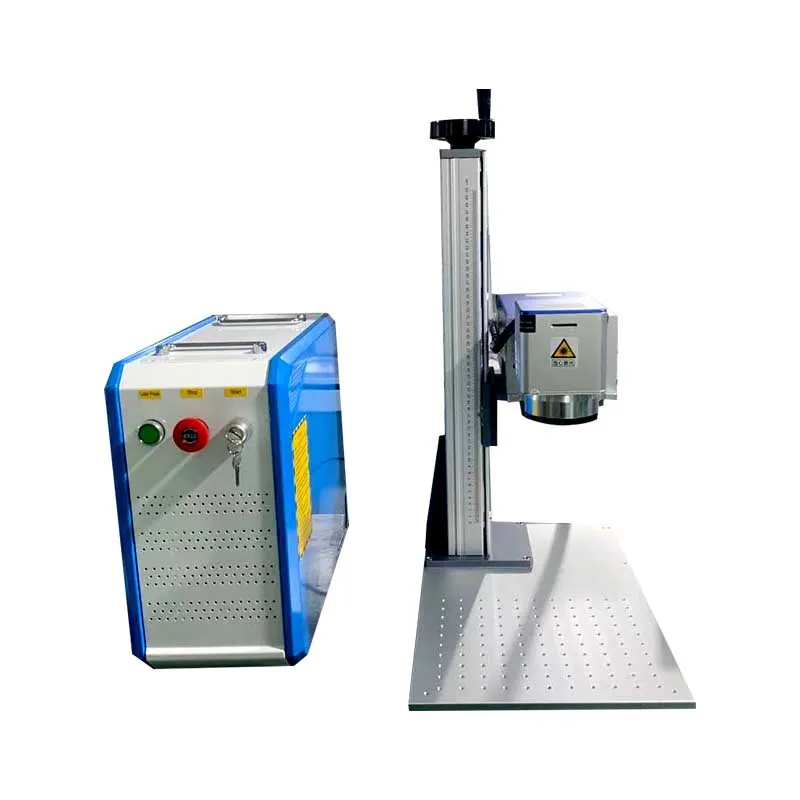
At our company, we offer a range of high-quality Industrial Laser Marking Machine that are designed to meet the diverse needs of our customers. Our Laser UV Marking Machine are equipped with advanced technology that allows for precise control of the pulse frequency, ensuring optimal marking results on a variety of materials.
One of our popular models is the 5w UV Laser Marking Machine. This machine offers a wide range of pulse frequencies, making it suitable for both fine and deep marking applications. Whether you're marking on metals, plastics, or glass, our 5w UV Laser Marking Machine can deliver high-quality marks with excellent speed and accuracy.
Conclusion
In conclusion, the pulse frequency of a UV laser marking machine has a significant impact on the marking process. It affects the mark quality, speed, and the suitability for different materials. By understanding how pulse frequency works and choosing the right frequency for your application, you can achieve the best possible marking results.
If you're in the market for a UV laser marking machine or have any questions about pulse frequency or the marking process, don't hesitate to get in touch with us. We're here to help you find the perfect solution for your marking needs. Let's start a conversation and see how we can work together to take your marking process to the next level!
References
- Smith, J. (2020). Laser Marking Technology: Principles and Applications. New York: Wiley.
- Johnson, A. (2019). Understanding Pulse Frequency in Laser Marking. Journal of Laser Technology, 15(2), 45 - 52.